School of Architecture
Sustainable Practices
Program Minor
The Sustainable Practices minor takes as its guiding principle the belief that that at this point in history we should all prioritize sustainability in our personal and professional lives. As part of that mission, we encourage students from across all majors to join us in exploring ways we can counter environmental destruction and its impact on climate change, inequality, and bodily health.
The Sustainable Practices curriculum offers different ways to engage action. We have courses steeped in environmental history, law, and policy, as well as hands-on, collaborative opportunities. Flexible learning modalities make completing the minor feasible. The minor also supports student-driven actions on campus, such as plastic-use reduction, food composting, and gardening.
Knowledge in sustainability is highly sought after across professions in today’s job market, and a Sustainable Practices can provide all our students with a competitive advantage upon graduation. Ultimately, however, the program’s goal is to give students a foundation for integrating sustainability into their post-graduation experience, helping them create impactful, rewarding, and mission-driven lives.
Sustainable Practices is a STEM program. Learn more about STEM at Woodbury.
Apply Request Information Take a TourRequirements and Curriculum
The Sustainable Practices minor requires five courses or fifteen units. Six of those units can also fulfill general education or major requirements. Courses outside of the minor curriculum may be considered if they meet the program mission statement. See your advisor or reach out to Emily Bills to see how you can make the minor work for you.
Graduate students are also welcome to take Sustainable Practices courses. These classes support the graduate concentration in Sustainability.
SUPR 110 Introduction to Environmental Policy and Management
SUPR 100 Introduction to Environmental Problems and Design
SUPR xxx Introduction to GIS
SUPR 201 Sustainable Practices: Design
SUPR 302 Environmental Research Seminar
SUPR 321 Energy and Society
SUPR 352 Environmental Law & Policy
DCMG 208 Sustainable Construction
DCMG 305 History and Theory of the Built Environment
*Other courses may be considered if they meet the program mission
statement. Requires chair approval.
Environmental Testing
We believe our Construction Management majors should feel prepared to use a wide variety of environmental tools that will help them be successful on the job site. Our Sustainability Hub, made possible through a Title V federal grant, is a robust lending library packed with scientific instruments ranging from an infrared camera that tests thermal temperatures to sound, air, and light quality meters.
Student Projects and Opportunities

Bioswale
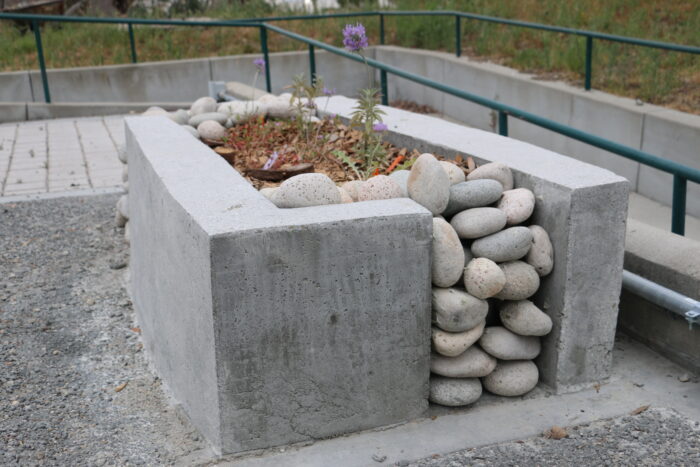
Sustainable Practices students acquired their work experience hours by designing and constructing a small bioswale based on appropriate native vegetation types, local soil media, and bioswale mechanisms suited to the site’s conditions to filter rainwater. The underground anaerobic bed of mixed aggregate, consisting of river rock, crushed stone, and sand, supports microbial biofilms that not only remove toxic sediments but also reduce nitrite, ammonia, and phosphorus levels. It is now a permanent part of our campus. Located on the upper campus by the Sustainability Hub, the bioswale raises awareness about how we, as a community, perceive water as a resource.
Food Waste Awareness
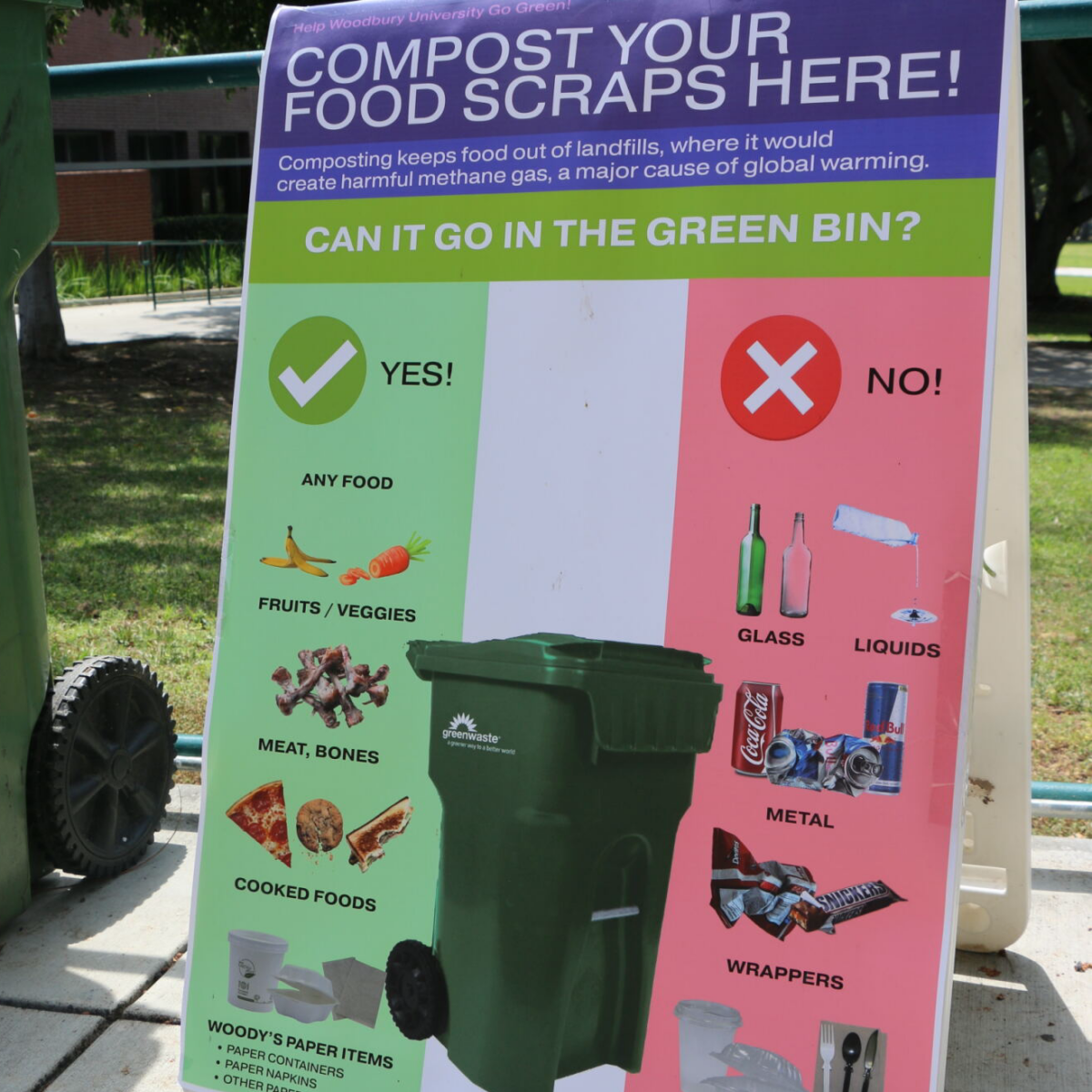
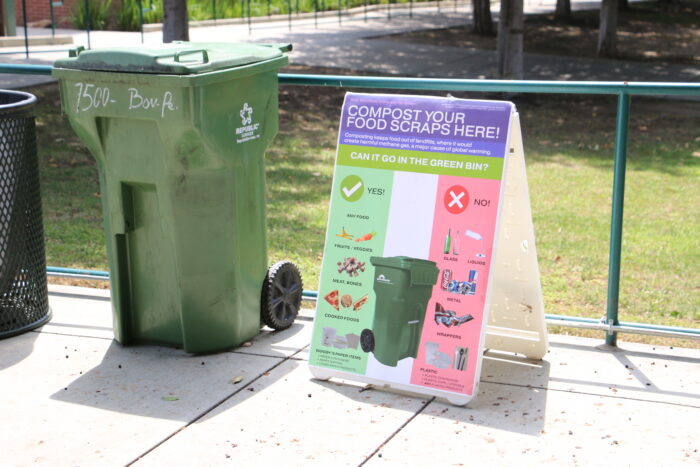
Food is not trash! Students in Food and the City and Environmental Research Seminar classes partnered with Bon Appétit to launch a food waste composting pilot program on campus. They created how-to signage and informational posters to help keep campus food waste out of the landfill. Hopefully future sustainability minors can help make campus food composting standard practice.
Reducing Single-Use Plastic on Campus
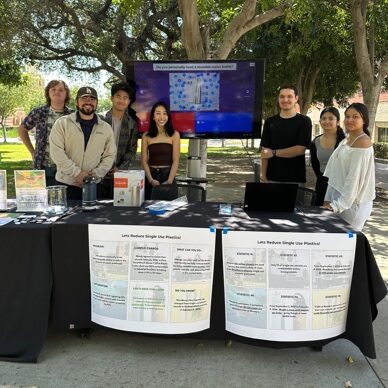
Sustainable Practices minors partnered with the Healthy and Sustainable Campus Committee and Bon Appétit to raise awareness on campus about the dangers to our planet caused by single-use plastic overproduction and consumption. As part of the project, in spring 2026 Bon Appétit replaced its single-use plastic utensils in Woody’s with compostable utensils. This will save an average of 89,000 single-use plastic utensils from the landfill each school year!
Campus Garden
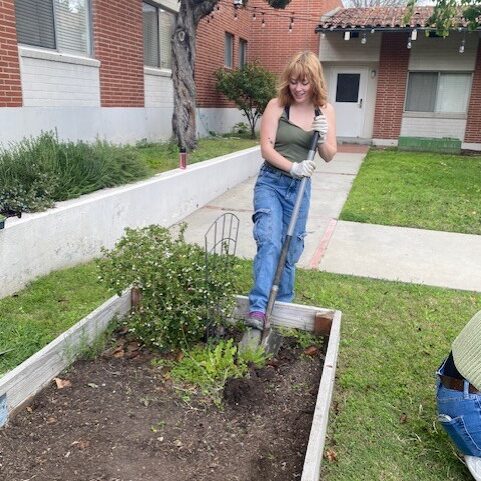
Sustainable Practices minors are perfect candidates for helping our campus garden thrive. The garden is in the South Hall Courtyard and is a public space for students, faculty, and staff to come together to care for and tend to a thriving campus green space. Past projects include building raised beds and growing fruit and veggies for our campus food pantry. There are also many fruit trees on campus, including avocado, pomegranate, grapefruit, and more. One is always ripe for harvesting!
Solar Futures House
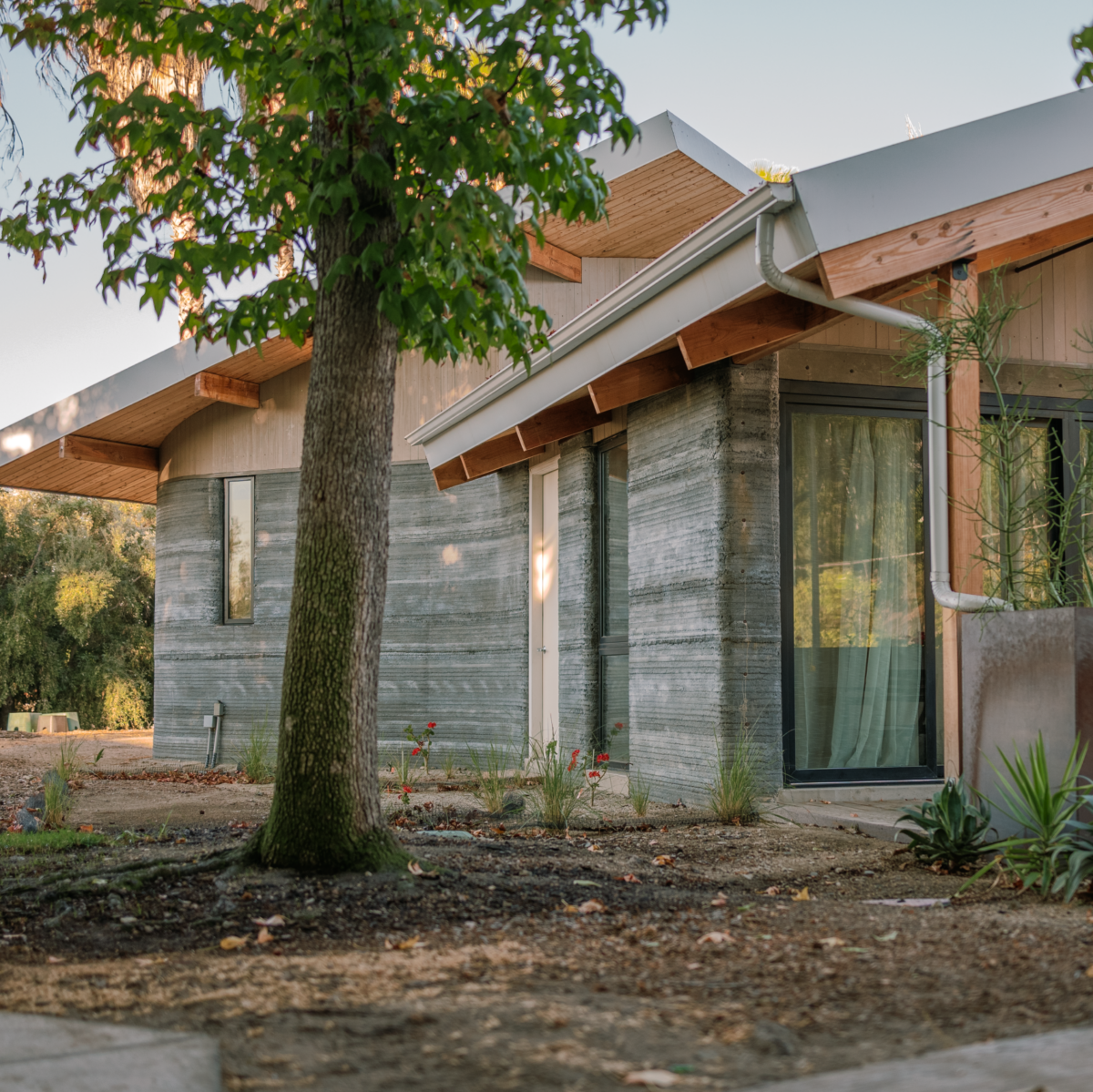
Sustainable Practices minors can serve as student workers maintaining and enhancing the Solar Futures House. The Solar Futures House is a groundbreaking 3D-printed, low-carbon, micro-living campus housing structure fully powered by renewable energy sources. The project addresses housing insecurity and global warming by proposing a viable and affordable housing solution that meets DOE requirements and achieves net-positive energy status.
 Sustainable Practices is a STEM program
The Sustainable Practices minor program was brought to the Woodbury College of Architecture, Design, and Media through a $3 million U.S. Department of Education Title V Hispanic Serving Institution Grant.