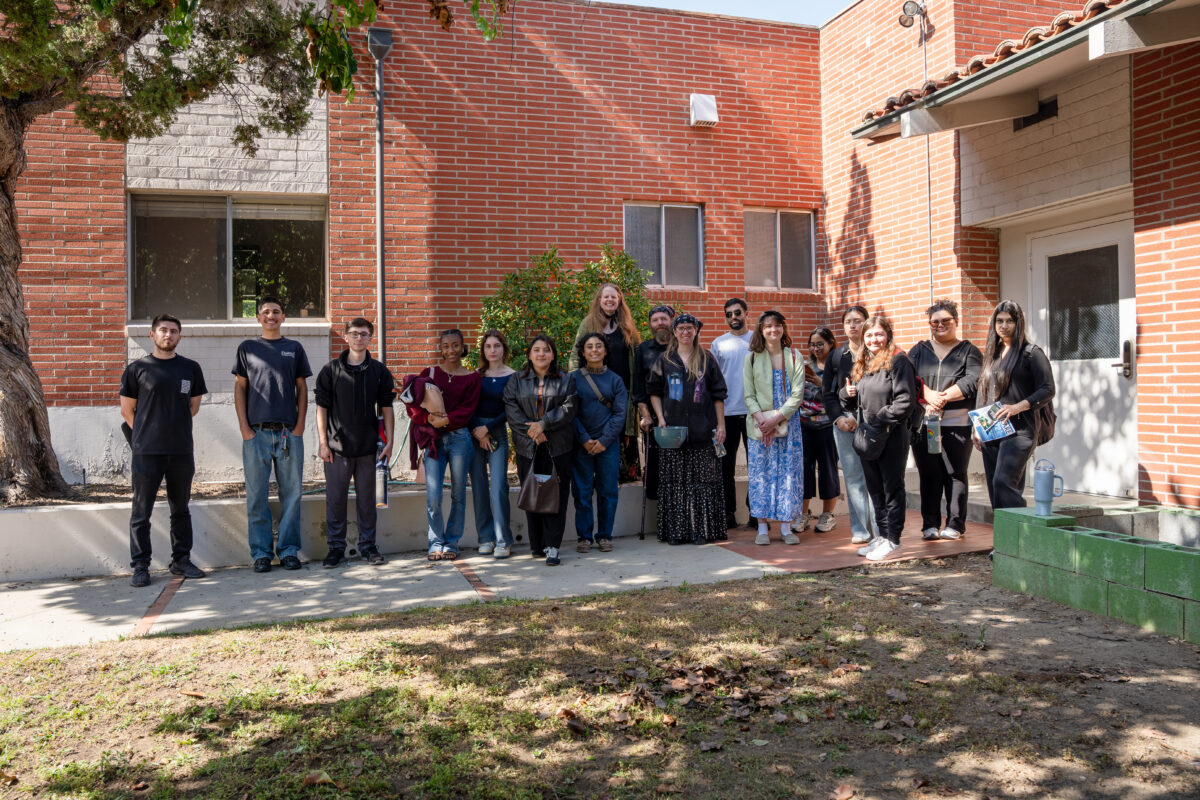
Become the Change: Inside Woodbury’s Media and Social Change Course
Most courses ask students to study a problem. Professor Nicole Keating’s Media and Social Change course asks them to do something about it. Offered during Woodbury University’s May term, the project-based class pulls students from across the university — architecture, design, media, business, liberal arts and sciences — and challenges them to address real social justice issues with real community partners and real deliverables.
“A lot of classes will prompt you to make change or consider change or promote change,” student Michael Garone said, “but it’s really rare that you get a class that actually lets you do the change and become the change.”
That ethos is built into the syllabus. Alongside readings and screenings like “The Social Dilemma,” the course requires community outreach and a finished media project designed to create an impactful solution for a problem they choose themselves.
One classroom, many causes
What makes the course distinctive is its range. Keating brings together students with wildly different skill sets and lets each group apply what they already know to a cause they care about.
“This class works so well for the May term because it’s a project-based class,” Keating said. “They all come together and apply their skills to a particular social problem; basically, making the world a better place. We plant the seeds so that later in their careers, whatever they consider doing, they can apply some of what they learned to social justice work.”
This year’s projects spanned the local and the global.
One group of architecture students examined burnout culture in design studios, including the normalized cycle of all-nighters, sleep deprivation, and “presenteeism” that can wear students down in demanding majors. Their poster campaign, designed for the very computer labs and studios where burnout often takes root, reframed exhaustion not as a badge of honor but as a barrier to success. Drawing on research, the students highlighted how long, inflexible hours and chronic stress can diminish well-being and academic performance. They also connected the issue to institutional inequities, noting that extensive unpaid studio hours can disproportionately affect students who work to support themselves and their families.
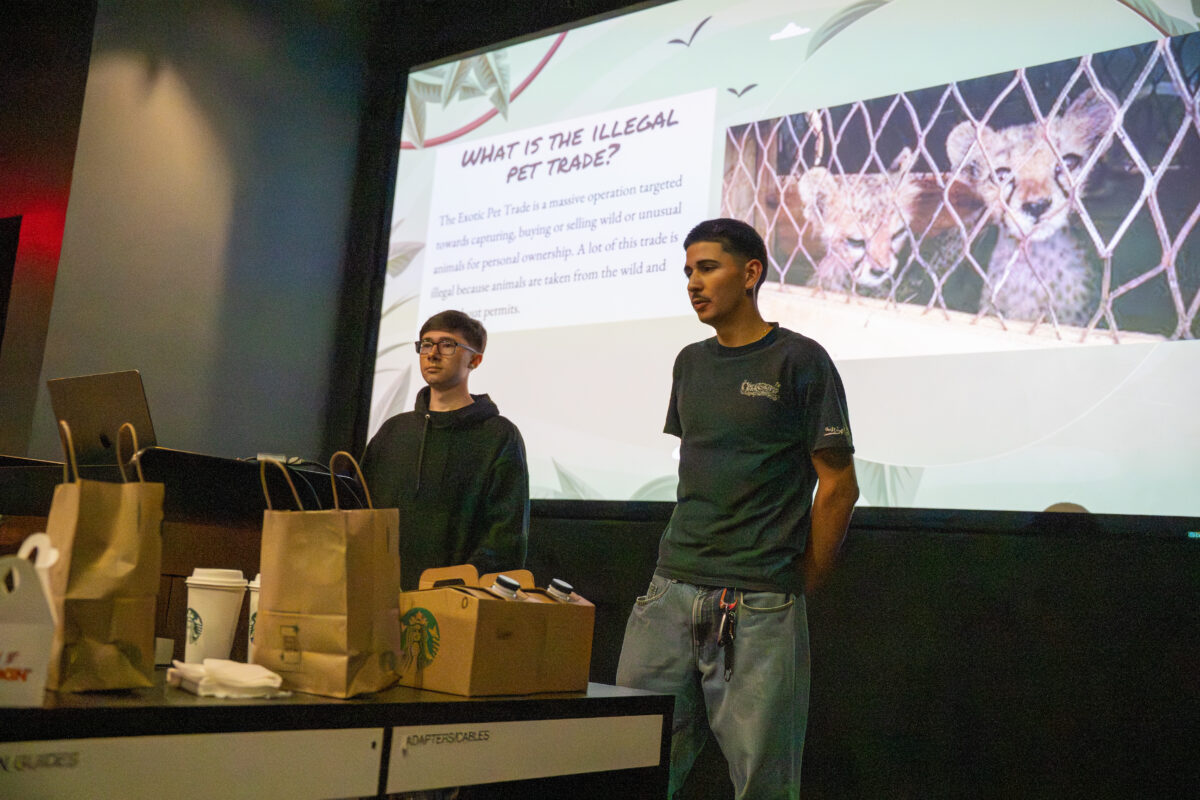
Another team focused on the exotic pet trade. Their project, “Content Over Care,” traced how social media repackages wild animals — spider monkeys, sloths, otters, glass frogs, African grey parrots — as cute, shareable content, fueling demand for a trade in which many trafficked animals die before they ever reach a buyer. Through flyers, pamphlets, an Instagram campaign
and a striking “Pets Are Not Content” poster series, the group promoted a simple message: Stop engaging with content that exploits wild animals and choose care over clicks.
Stories that spark awareness
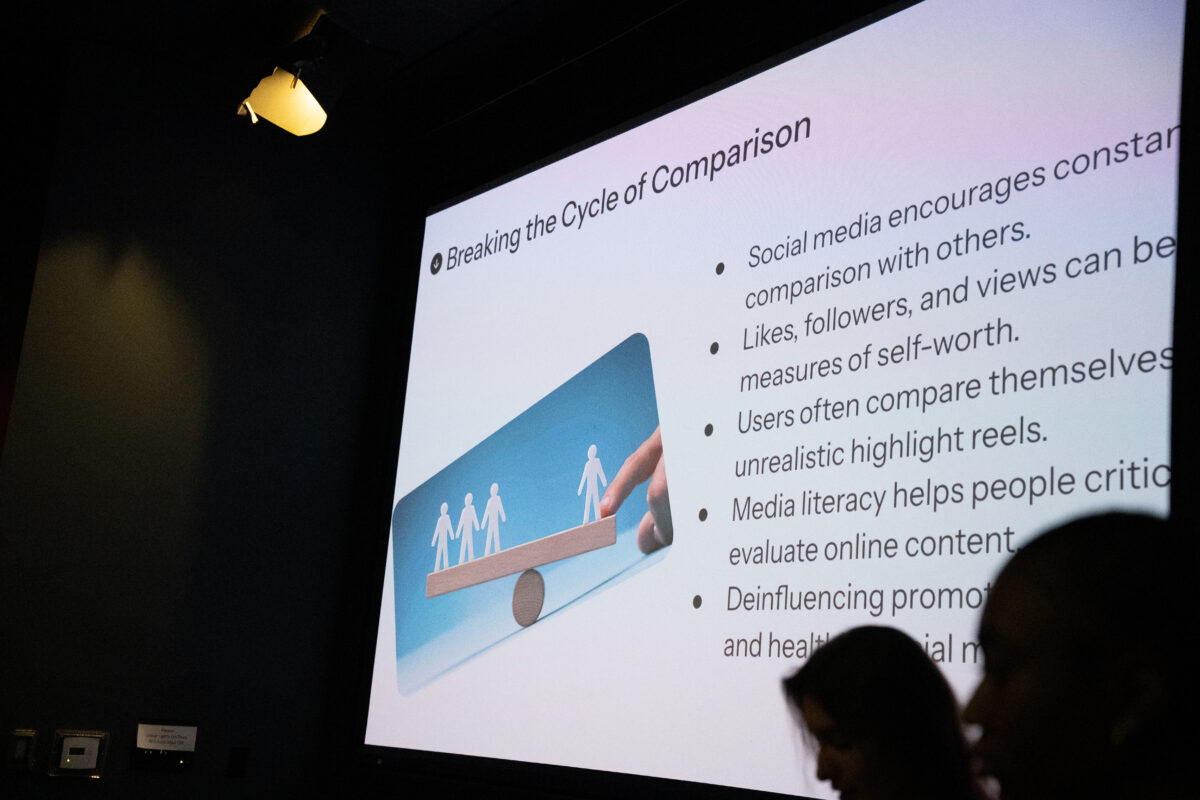
Mental health surfaced again in an in-depth research project examining the effects of social media, accompanied by an educational poster campaign. Other student projects tackled difficult histories and social inequities through documentary and audio storytelling.
One group produced “Racism in Motorsports,” a podcast exploring whether IndyCar primarily caters to a white American audience. The students interviewed a Hispanic graphic designer about identity and representation in merchandise and examined the stereotypes, nicknames and sponsorship barriers that people of color and international drivers often face.
Another team created “Surviving War,” a documentary featuring firsthand testimony from survivors of the 2020 Beirut explosion, the Syrian Civil War, and the Salvadoran Civil War. Through stories of displacement, loss and resilience, participants described families forced to flee their homes while communities came together to share food, shelter, and support to survive.
Planting something that lasts
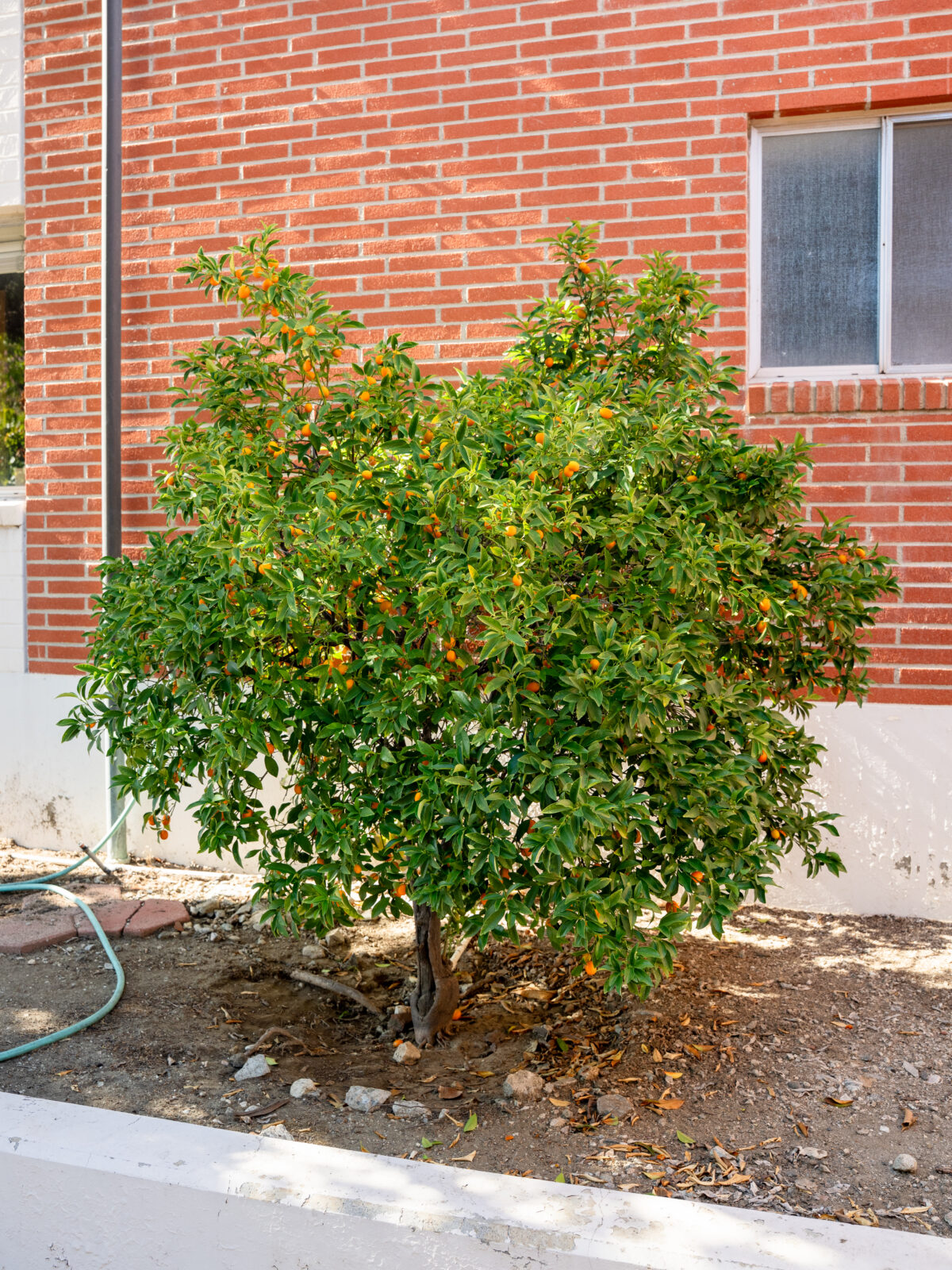
Perhaps the most tangible outcome was a project that transformed a neglected garden plot in South Hall’s courtyard. Students cleared the overgrown space into ready soil and launched the Bee’s Garden Initiative, complete with plans for an ongoing garden club to support those experiencing food insecurity on campus.
“I am a member of the group Bee’s Garden Initiative,” Evelyn Jane Strathmann said. “I loved this class because it was collaborative, it was unique, and it was creative. I am happy that Woodbury University now has a community garden because of this project and I will forever have fond memories.”
The project reflects one of the course’s defining strengths: Its impact extends beyond a single term.
Why it matters for students
For prospective and current students, the real value isn’t one poster or podcast or documentary. It is the transformation that occurs through the process of creating them.
The course is built around civic engagement outcomes, challenging students to apply classroom knowledge to community issues, communicate with stakeholders and take ethical action.
Students do not simply analyze media; they produce it, share it with audiences, and grapple with its real-world implications.
Student Bianca Colvin found that breadth eye-opening.
“We got to learn everything from how social media affects people to the exotic animal trade. It makes you really think about everything around you and what’s going on in the world. It’s such an important class that everyone should take.”
For student Kristen Flores, the course broadened her understanding of issues she had never previously considered.
“I learned a lot about issues that I had no idea I aligned with until I took the course and became more aware,” Flores said. “Even though it might not be a requirement for your academic plan, it really opens your eyes. The world is bound to change, and there are going to be issues that come
up. It’s good to pick a side, form an opinion.” Don’t stay quiet or oblivious, because “one way or another, these problems affect you, and your impact can help create change for the better.”